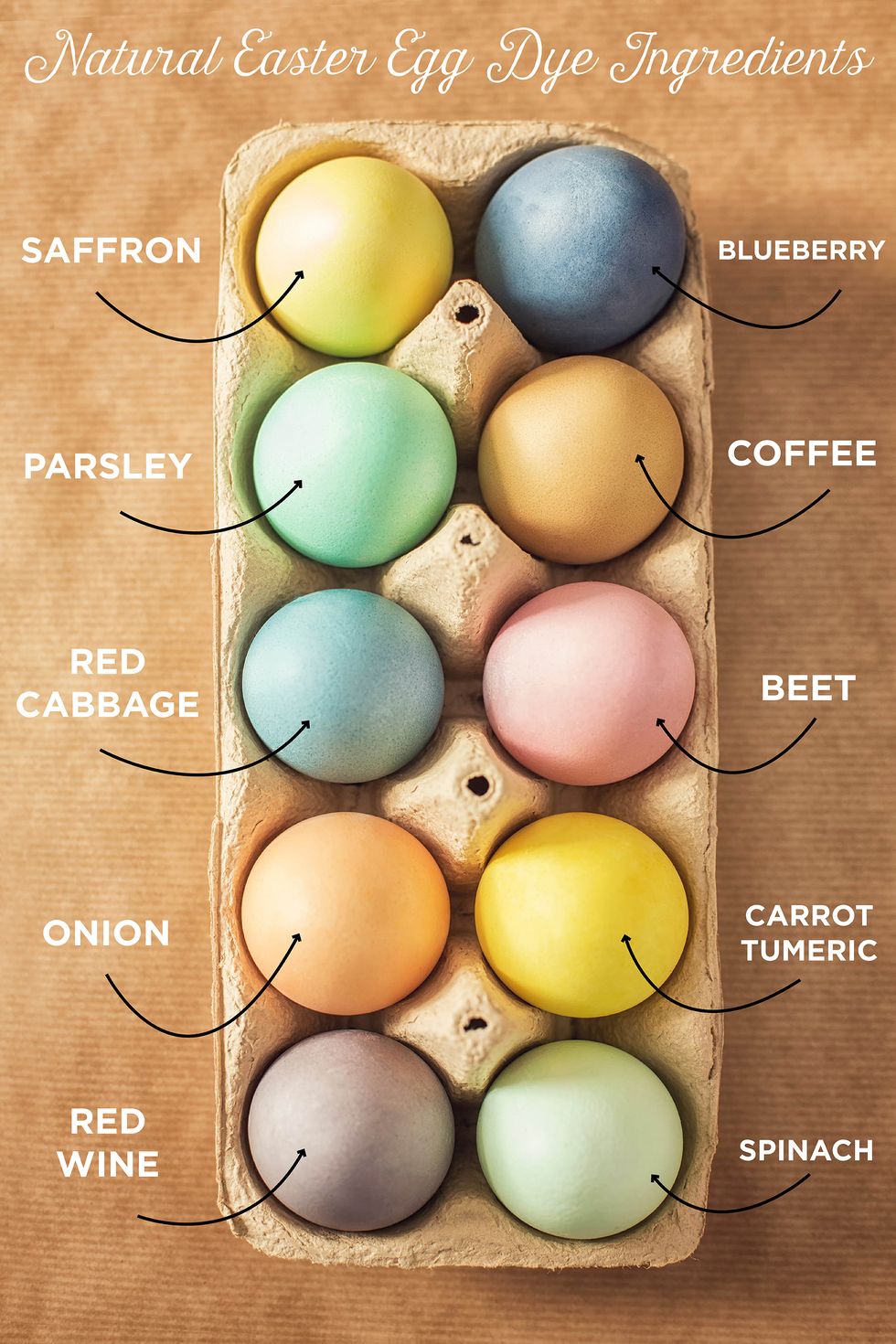
From blueberries and beets to coffee and onion skins, everyday pantry staples can create soft, earthy dyes that look sophisticated and chic. Even better? They’re natural, budget-friendly, and surprisingly easy to make.
Whether you're going for muted pastels or rich, saturated tones, here’s how to dye Easter eggs using ingredients you likely have on hand.
Not only will grabbing what you have on hand save you some money but we guarantee you'll fall in love with the look of naturally dyed eggs. Gather them in a basket or bowl for a rustic Easter brunch centerpiece—your Easter table decorations will never look better!
Material You Need to Naturally Dye Eggs:
You can choose ingredients based on the color you want—or simply use what’s already in your kitchen.
- Dark blue: Blueberries
- Light blue: Red cabbage
- Beige: Coffee
- Orange: Onion skins
- Yellow: Turmeric or saffron
- Green: Parsley or spinach (note: results may be subtle)
- Purple: Red wine
- Pink: Beets
You’ll also need:


- White vinegar
- Salt
How to Naturally Dye Easter Eggs
Make the dye:
Bring 1 quart of water, 1 tablespoon of salt, 2 tablespoons of vinegar, and 2 tablespoons of your chosen fruit, vegetable, or spice to a boil.
Simmer and strain:
Reduce heat and let simmer for about 30 minutes. Strain out solids and allow the liquid to cool to room temperature.
Dye the eggs:
Dip hard-boiled eggs into the dye, one at a time, for at least 5 minutes. For deeper, more saturated color, let them soak longer.
Naturally dyed eggs have a softer, more organic look than traditional kits—perfect for a rustic Easter brunch centerpiece. Arrange them in a bowl or basket for an effortless, elevated table display.
Tip: Save the chart below as a handy egg color guide!