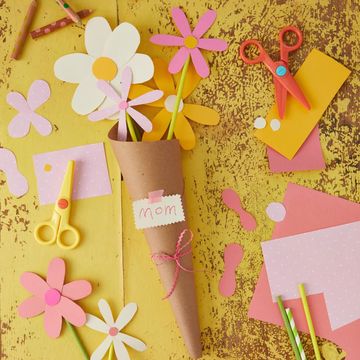
You don’t need a florist—or a big budget—to create a Mother’s Day bouquet that looks beautiful. To go the DIY route, combine one focal flower, complementary secondary blooms, and greenery. That’s it!
I bought these flowers at Trader Joe’s, but if you have oak leaf hydrangea blooming in your yard, they would make a great main bloom, and ferns from the yard would work great as greenery.
What You’ll Need:
- Flowers, including one main type of flower and 3 to 4 types of secondary flowers.
- Greenery
- Clippers
- Rubber bands
- White parchment or wax paper
- Kraft paper
- Stapler
- Ribbon
How to Make a DIY Mother’s Day Bouquet
1. Start by Choosing Your Flowers
Choose one “centerpiece” or main type of bloom. It should be large, showy, and the first place your eye lands when looking at the bouquet. I chose a garden rose with light cream petals that are tipped in a soft pink. Next, pick the secondary flowers. A bouquet looks best when you stick to a tight color palette. So, based on my main bloom, I chose secondary flowers in shades of pink; I opted for tulips, sea lavender, rice flowers, carnations, and calla lilies. You will also need greenery to help break up the flowers and offer another texture.


2. Prepare Your Flowers
It’s important to remove all the leaves except the uppermost sets around the flowers. Leaves will rot quickly if submerged in water, not only causing your bouquet to wilt faster but also causing an awful decaying smell. Pull off any outside leaves that are bent and browning and discard any flowers or greenery that are wilted.
3. Start With the Greenery
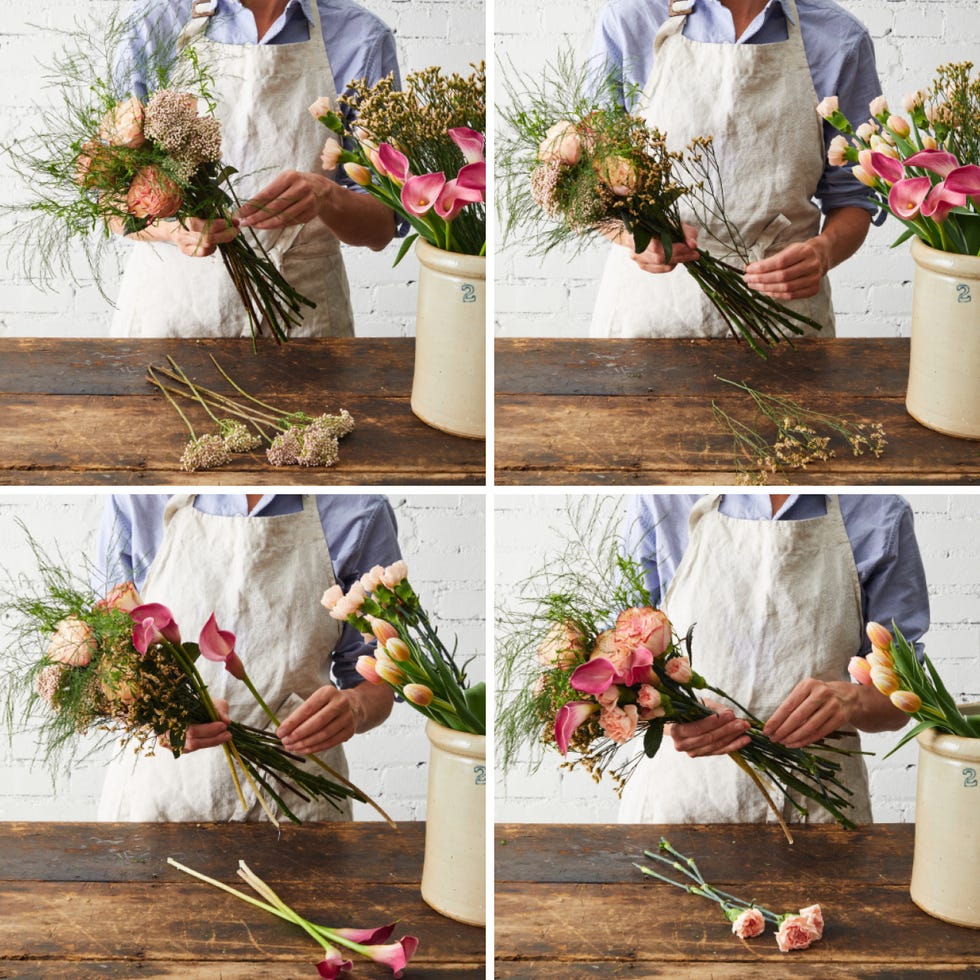
Start by gathering a few sprigs of greenery. You will want them to be tall and wispy so that they come above the bouquet. Hold them lightly between your thumb and pointer finger so that they splay out at the top and don’t become a tight bunch.


4. Add the Main Bloom
Next, add your main blooms around the greenery. You want the blooms to be at different heights from one another to help create visual interest.


5. Add the Secondary Blooms
Add the secondary blooms, one type at a time. Add one type of bloom all in one spot, making sure the blooms are at varying heights. Rotate the bouquet in your hand and add another secondary flower. Repeat until all the secondary flowers are added.



6. Cut the Stems and Wrap With a Rubber Band
Hold the bouquet in the middle; use garden pruners to cut the stems so that they are all the same length. Wrap the stems with a rubber band to hold everything together.


7. Wrap the Bouquet
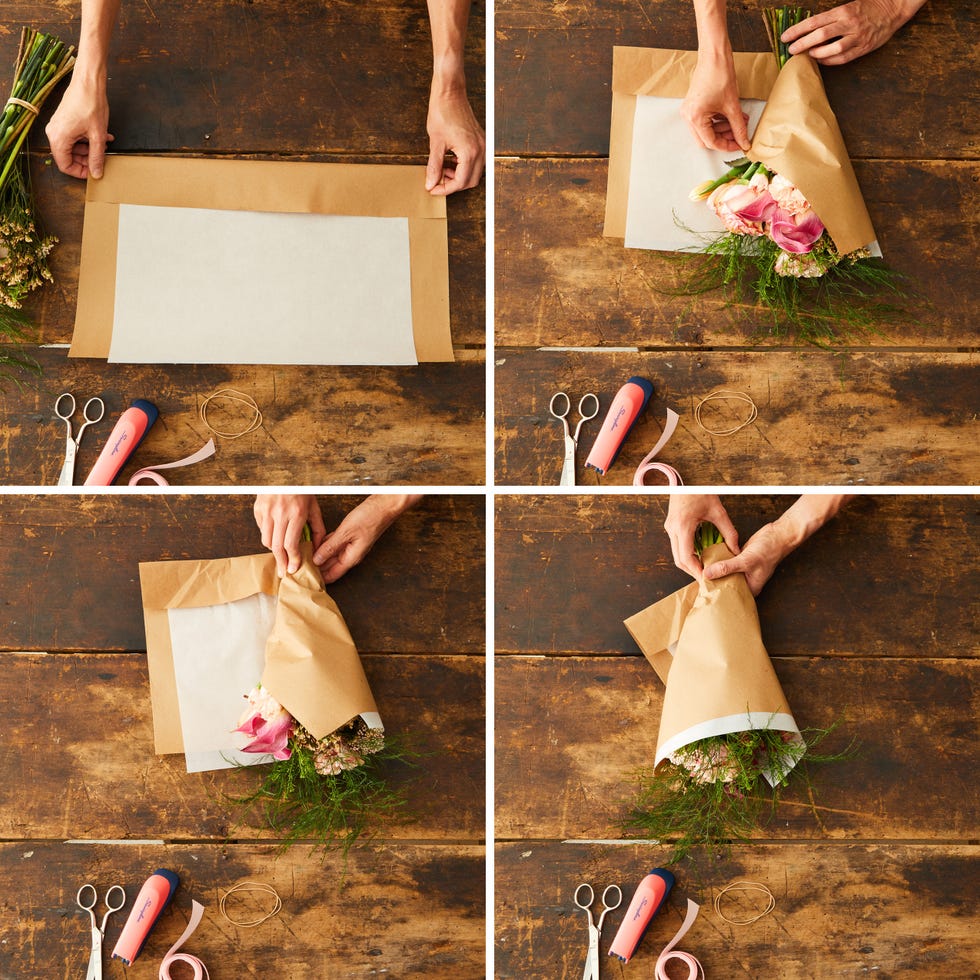
Place a piece of white parchment or wax paper on top of a piece of brown kraft paper (my pieces were 12 by 16 and 20 by 14 1/2 inches, respectively). Fold the bottom of the kraft paper up a few inches, creating a finished-looking edge. Place the bouquet in the middle of the paper, with several inches of the stems extending beyond the bottom of the paper. Pull one corner of the paper up and over the bouquet. Roll the paper and bouquet to envelop it.

8. Close the Paper
Use a stapler to hold the top of the paper closed.


9. Add the Finishing Touches
Wrap a rubber band around the paper and stems to help hold the paper closed. Next, tie a ribbon around the rubber band to cover it up and help make a pretty package.


Add a gift tag if desired. Voilà!